
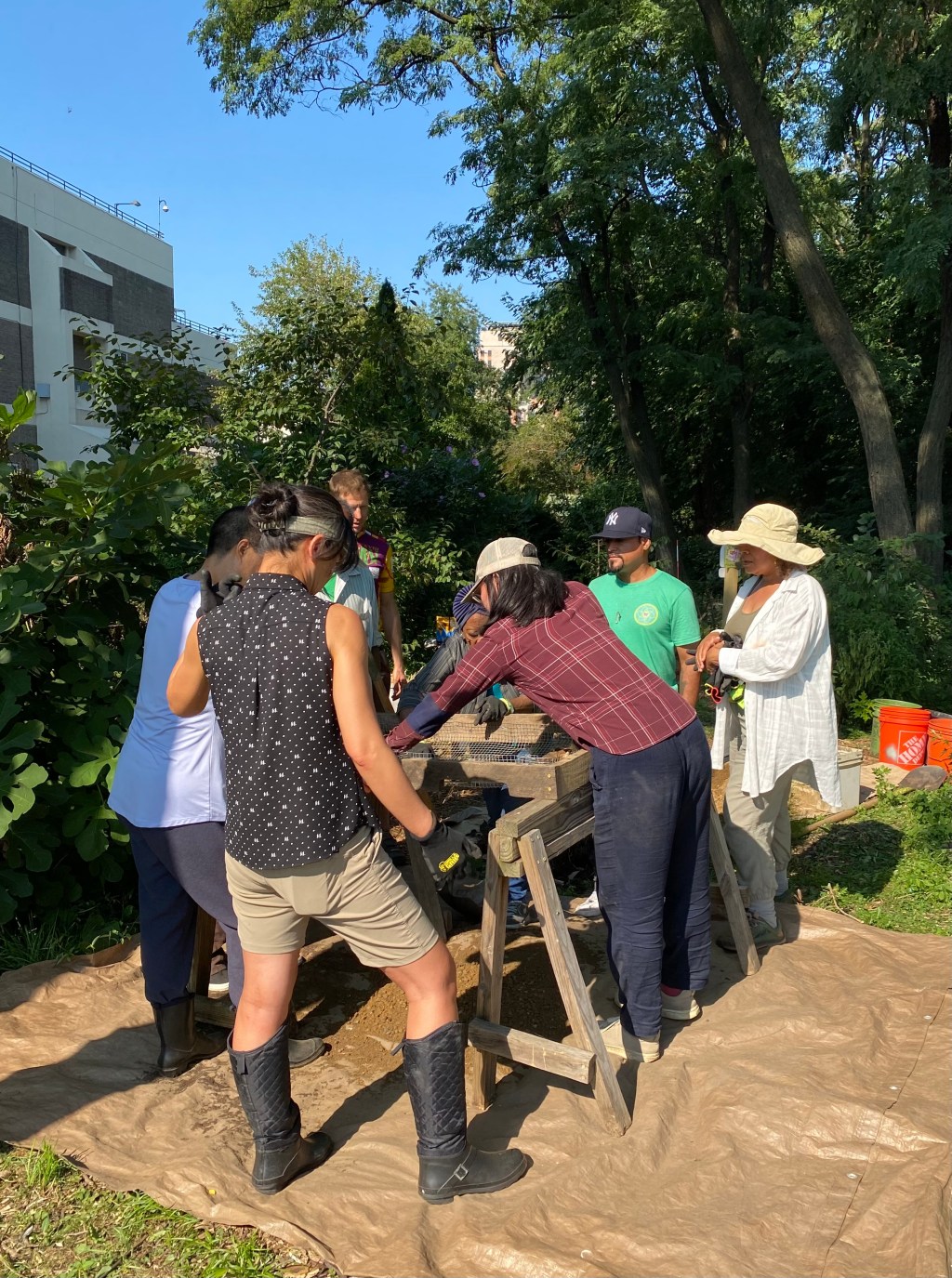
Last week I took a break from the light straw-clay tiny house to go down to NYC and teach my first natural building workshops at Drew Gardens in the Bronx. In four short days, I had a blast with the small but mighty DGB team building the cob chicken coop that I’d designed for them earlier this year. I got in touch with DGB through a mutual friend, and was delighted to find people who were very enthusiastic about learning natural building.
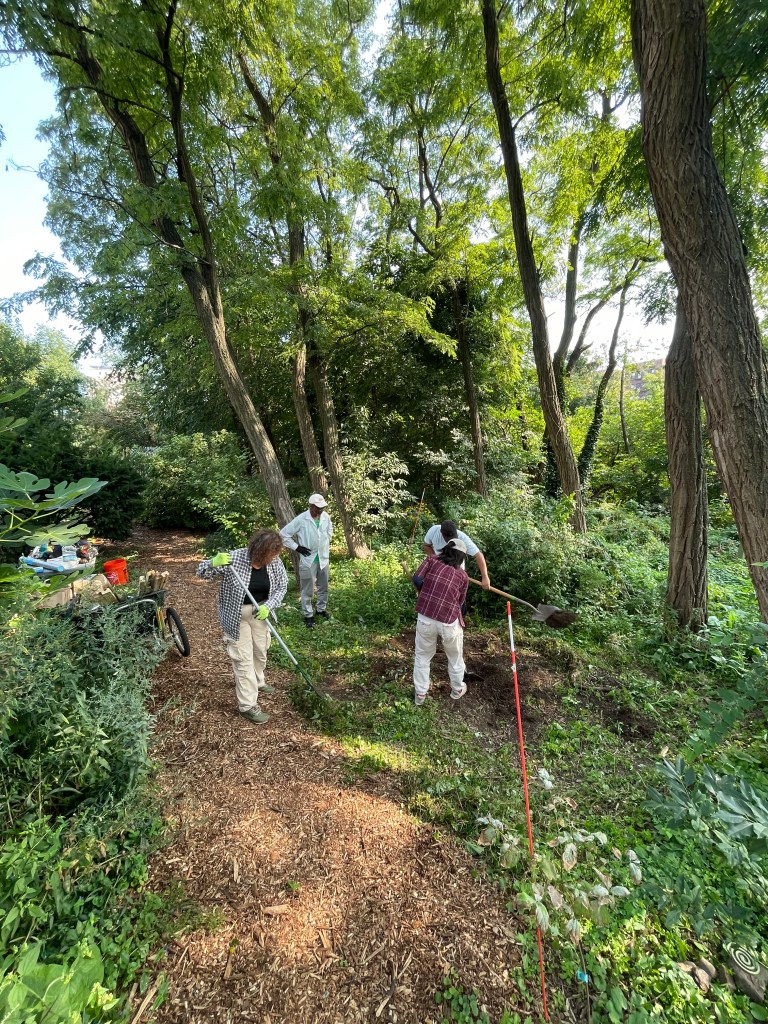
We started by clearing the spot and digging some holes to check out the site soil. Drew Gardens has a special story: the site was once a dump, and had gone through many industrial uses and abuses. Years ago, Bronx community members came together to turn it into something better, and there is now a lush riverside oasis where you’d least expect one, filled with a diversity of plants, vegetables, fruit trees, and wildlife.
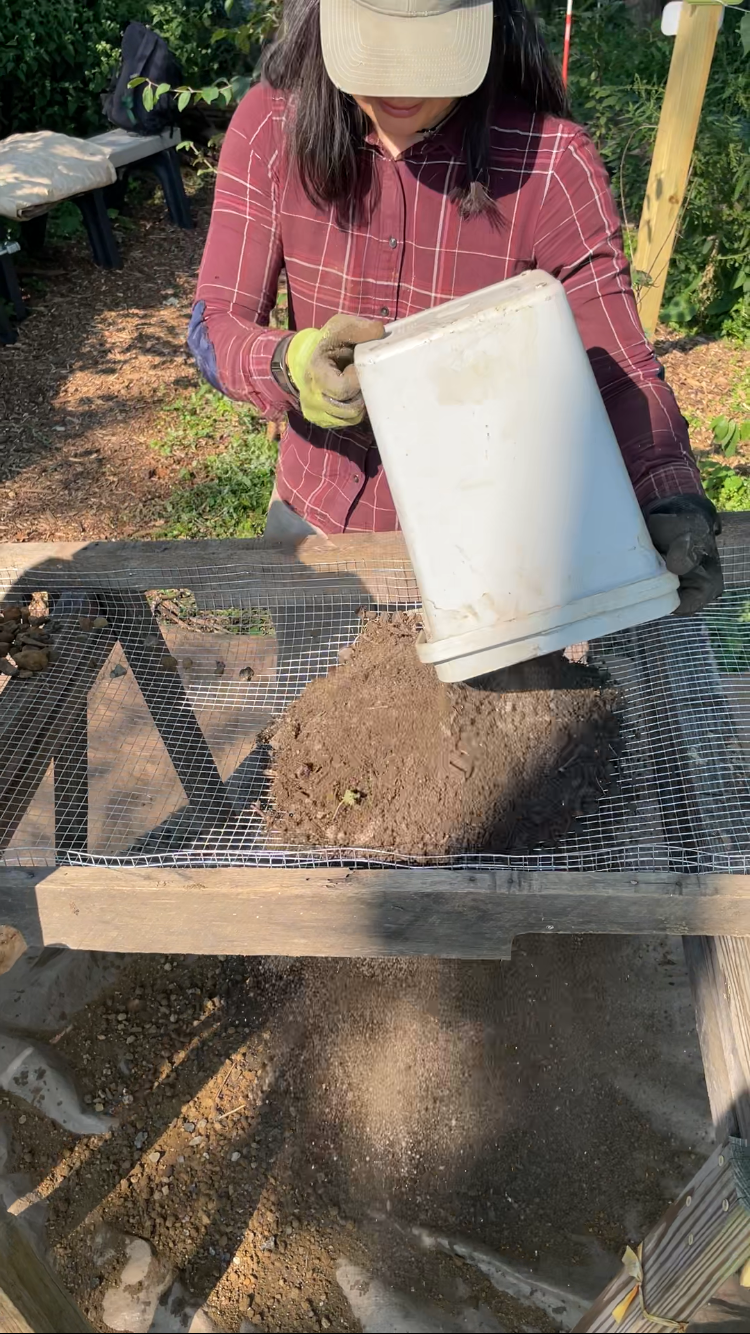
All the soil onsite was hauled in when the garden was created, so there wasn’t really a distinct topsoil-subsoil structure. It was fairly sandy, with lots of rocks ranging from specks of mica to great boulders that we could barely move. I tested the soil by mixing some with water and feeling it in my hands. It felt nice and gritty, which would add good strength to the cob mix, but not very elastic or sticky, which indicated low clay. Some rich clay areas had been unearthed on some previous digs, but we couldn’t predict where more clay was located underground. Some of us went adventuring around the corner and found a nearby construction site that had excavated some clay-rich soil, so we brought buckets of it over to augment our site soil.
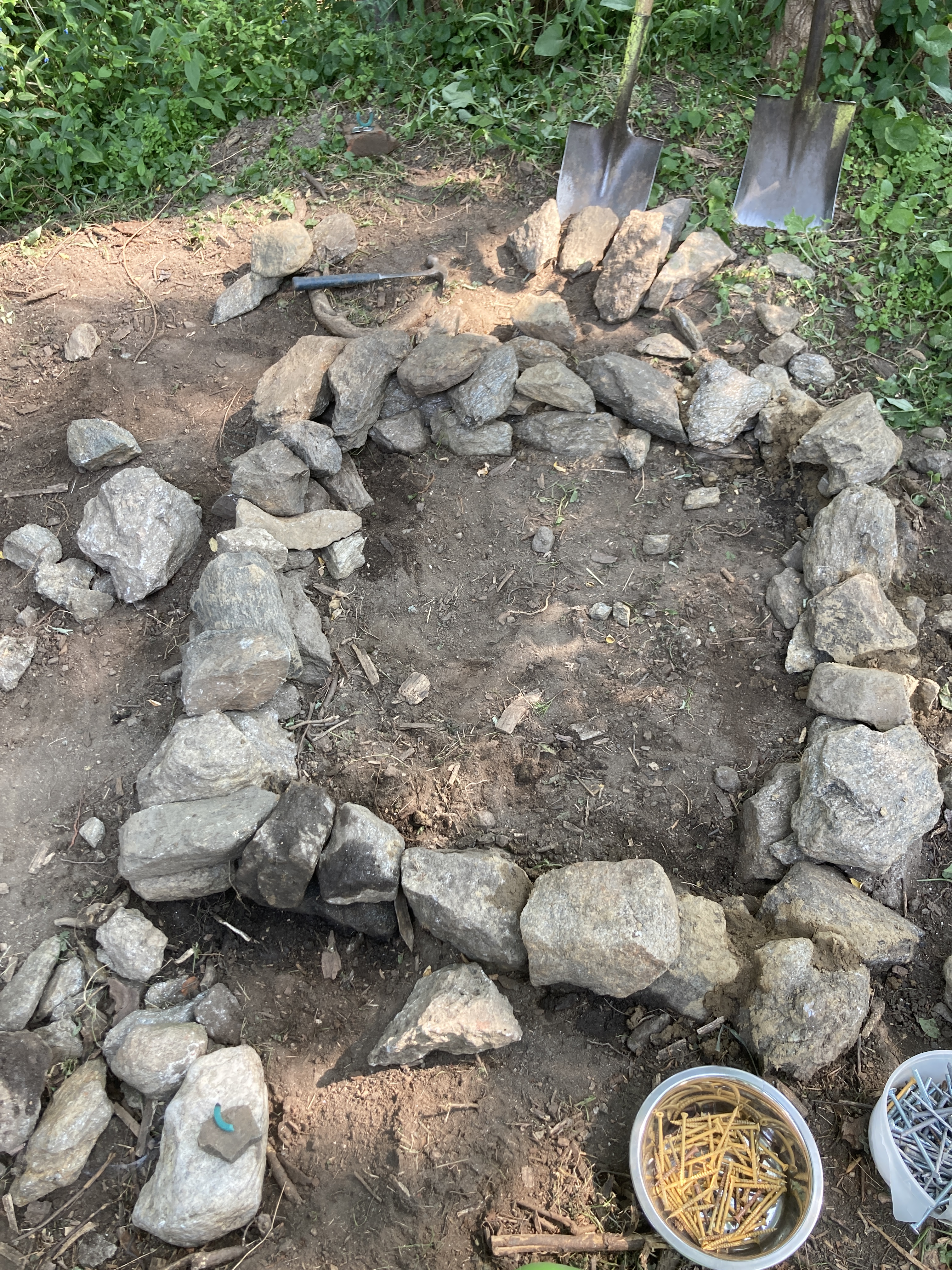
Meanwhile, I started building a stone foundation with the plentiful rocks we had dug out of the ground in our search for clay.
The role of the stone foundation is to block water from soaking into the bottom of the cob walls and slowly causing them to soften and crumble away. The one thing cob can’t do is constantly be wet: just like an unfired clay sculpture, it will lose its strength and structure and return to the earth. People have used stone foundations, with and without mortar, to support buildings for millennia. The stone foundation I built is miniaturized: a human scale building would require a much wider, deeper, and taller foundation.
Once I was satisfied with how sturdy the foundation felt, we got on with the cob.
Into the tarp went sifted soils, straw, and water. I adjusted the ratio of the soils as we mixed, landing on a mix that felt the right blend of rigid and malleable. Enough straw so it took effort to pull apart, enough clay so that it all stuck together, enough sand so it didn’t squish too easily, and enough water to make a damp “dough.”
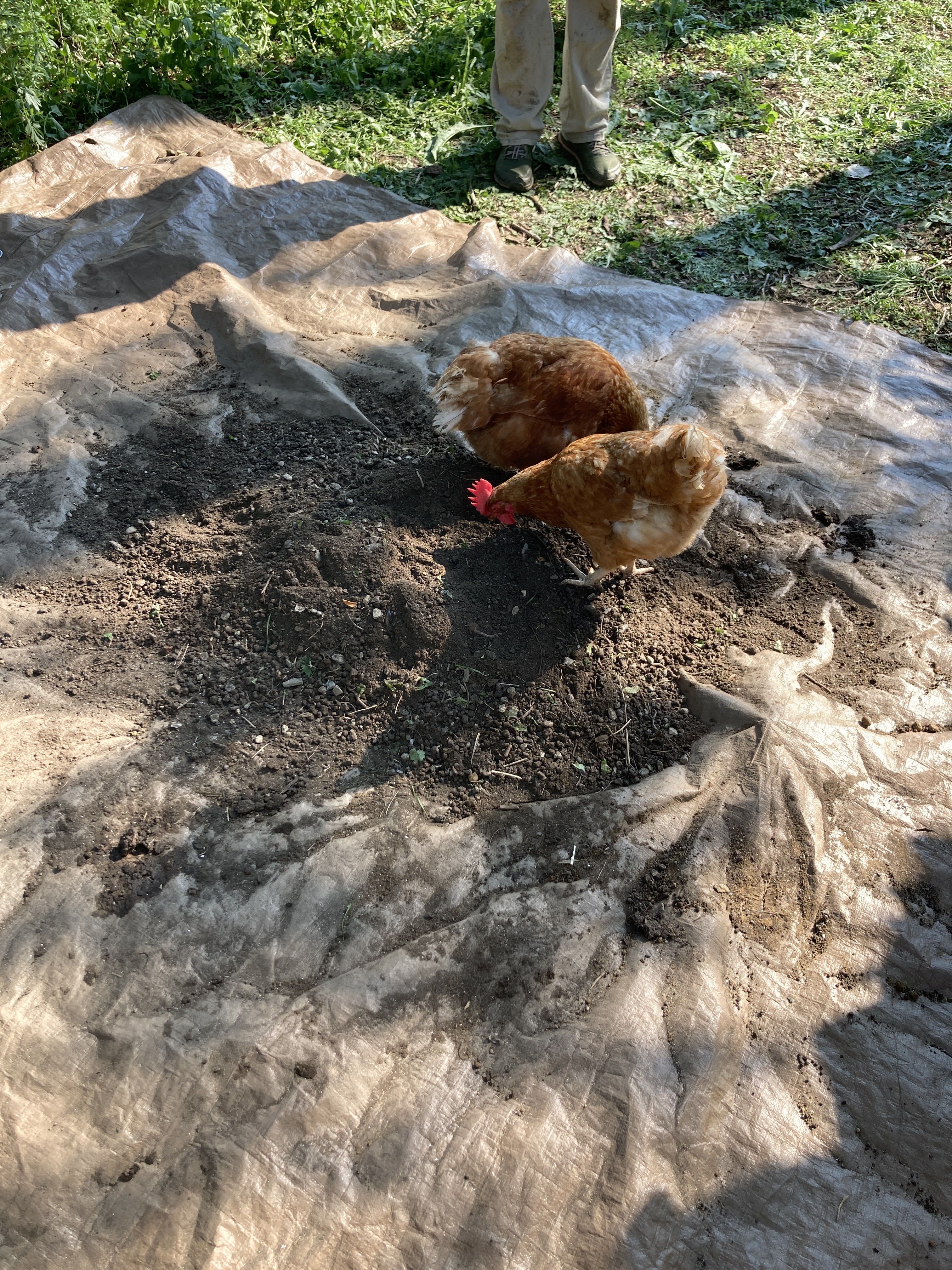
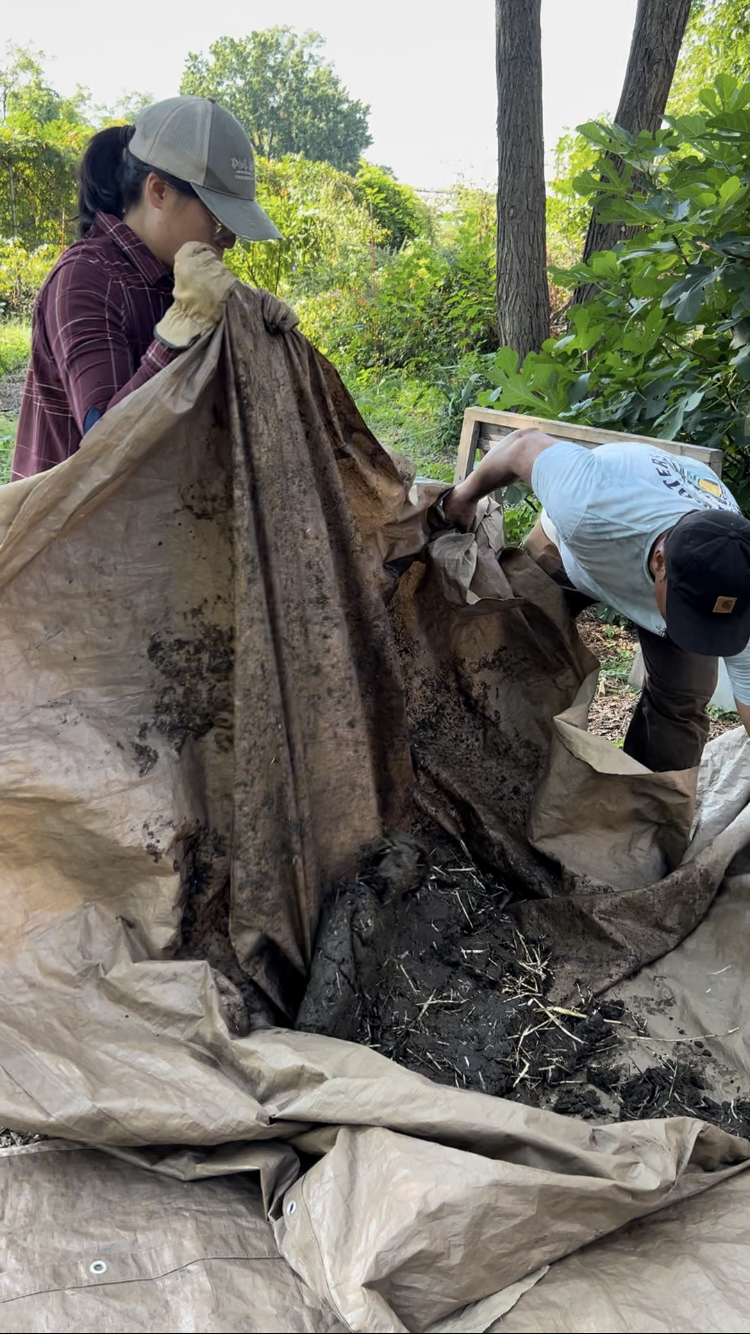
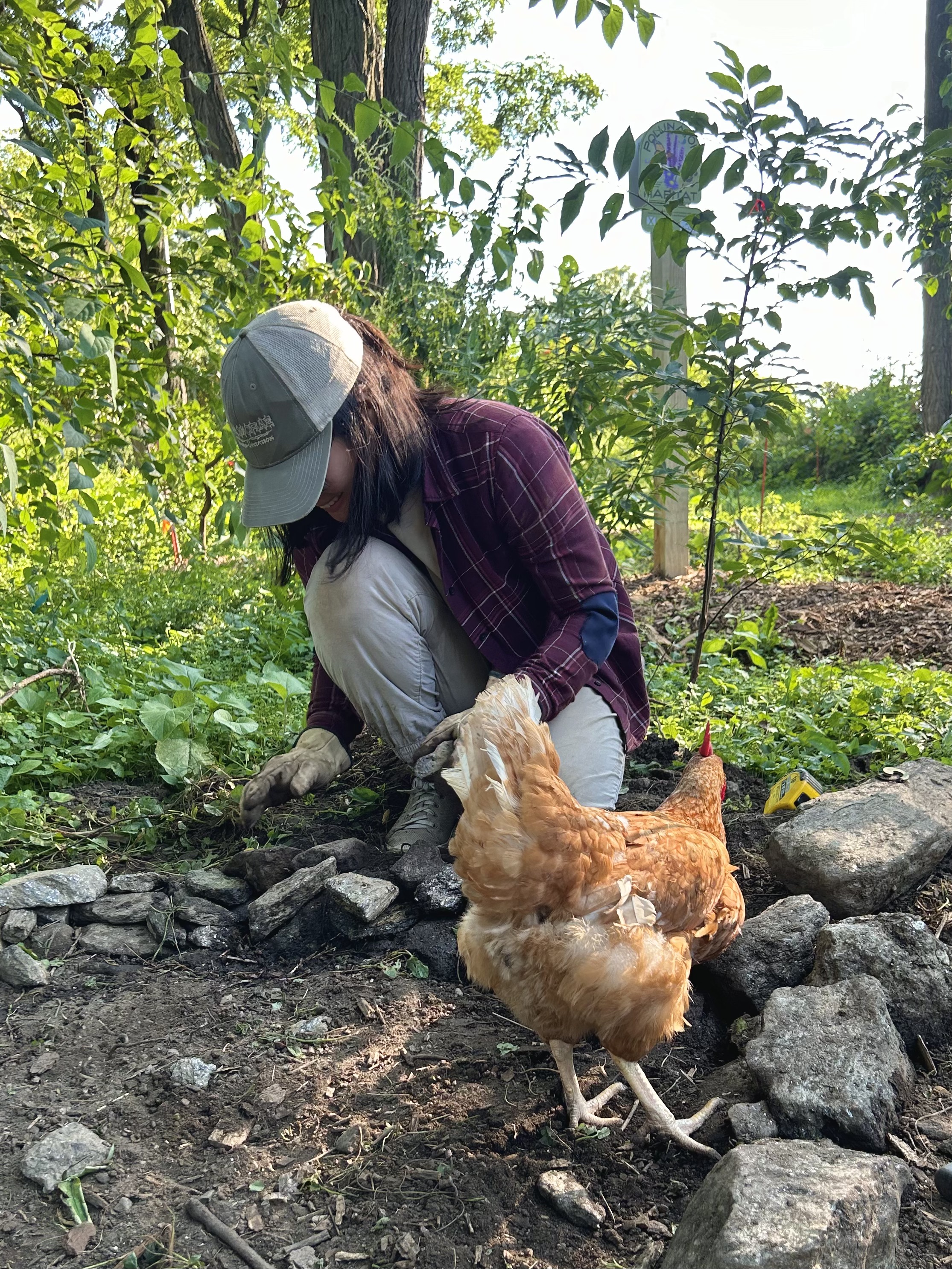
I would have liked to share the delight of barefoot cob stomping, but with city soils that had the occasional piece of glass and rusty nail, that wasn’t safe. Only the chickens did some barefoot mixing when they wandered over curiously. So we stomped and danced with shoes on, both directly on the cob and through the tarp. Here, the real dance wasn’t in the stomping, but rather the turning of the mass with the tarp. Two people would each grab a corner and pull it, folding the tarp in half in one direction. Just like a dance, we communicated in words and gestures: I grab this corner, you grab that corner, so then we can fold it this way. Stomp for a little, back off, repeat in one of the other three directions.
On the third day of the build we hosted a group of workshop participants for a wonderful afternoon of learning, both hands-on and hands-off. I started with a presentation on the background of natural building, from Indigenous building methods to modern standard construction to today’s natural building movement. We passed around material samples and my natural building photo book.
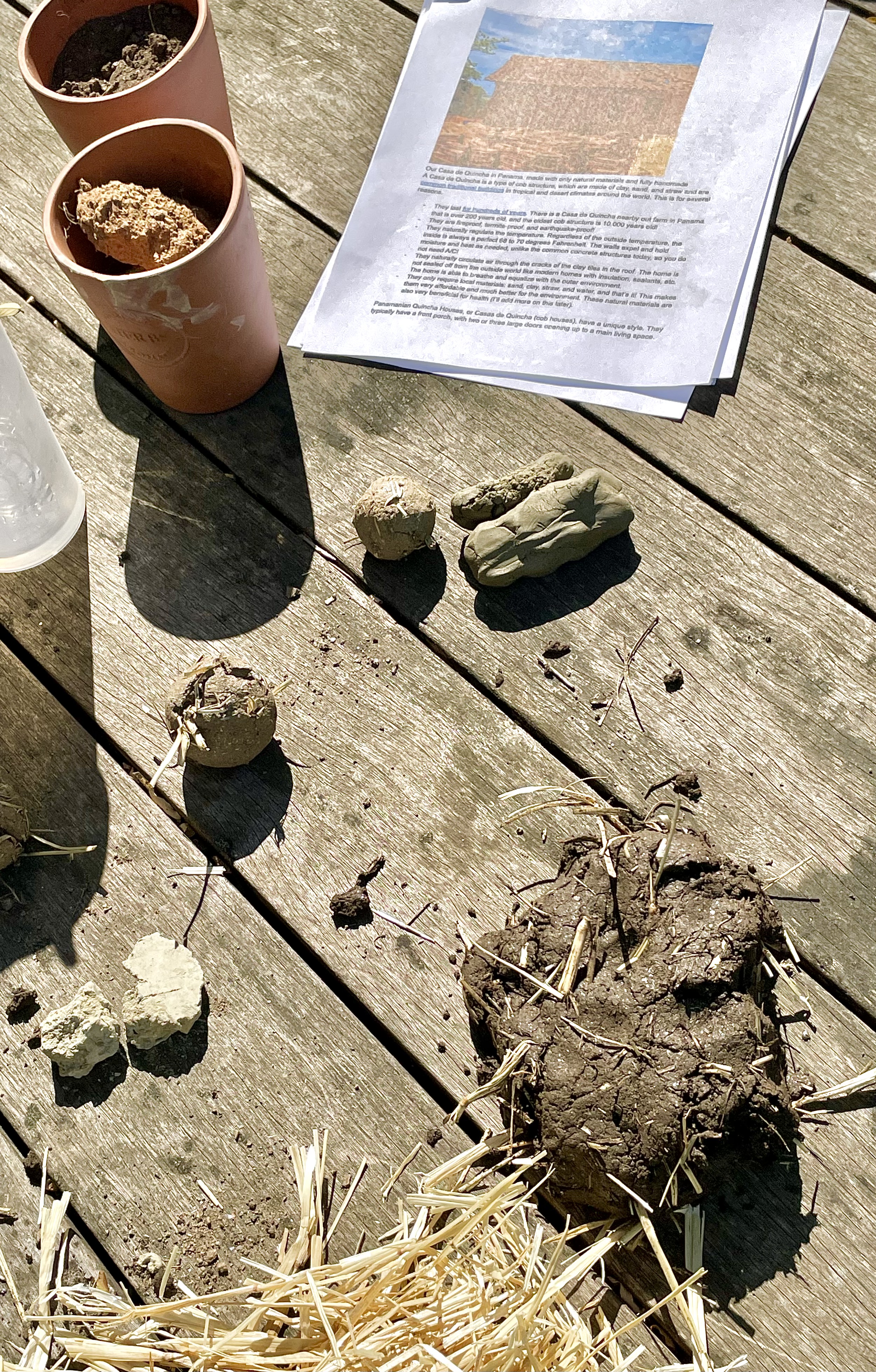

Then we got our hands dirty diving into cob! Participants learned to mix cob and sculpt a cob wall, learning to feel the very things that made the work fun and made the fun work! There’s just no substitute for actually doing it.
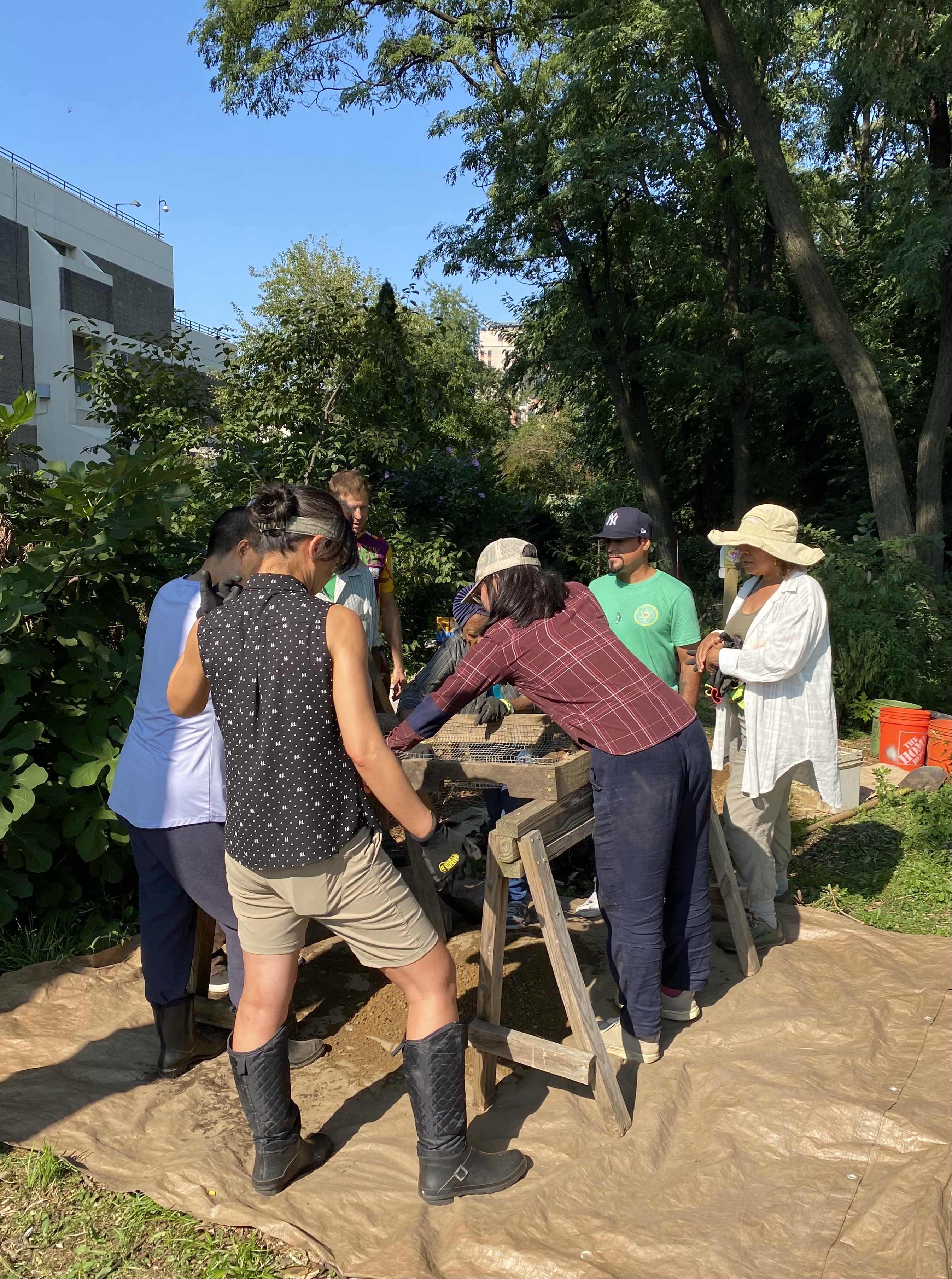

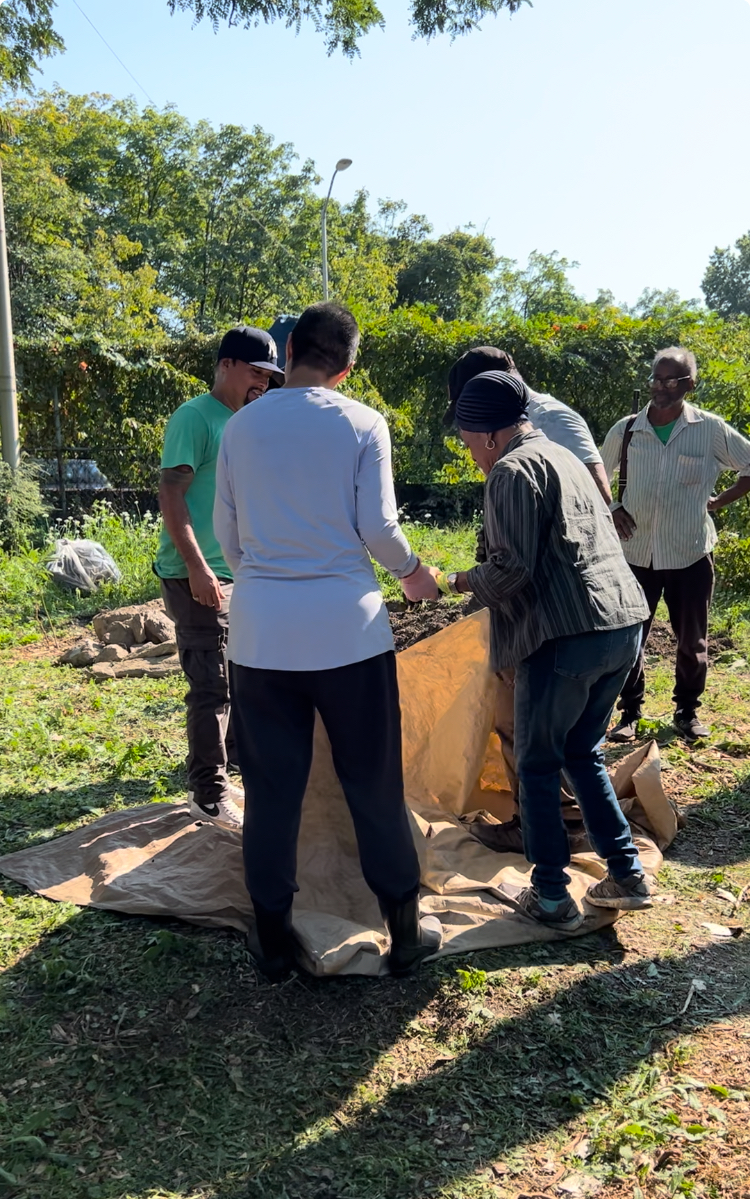
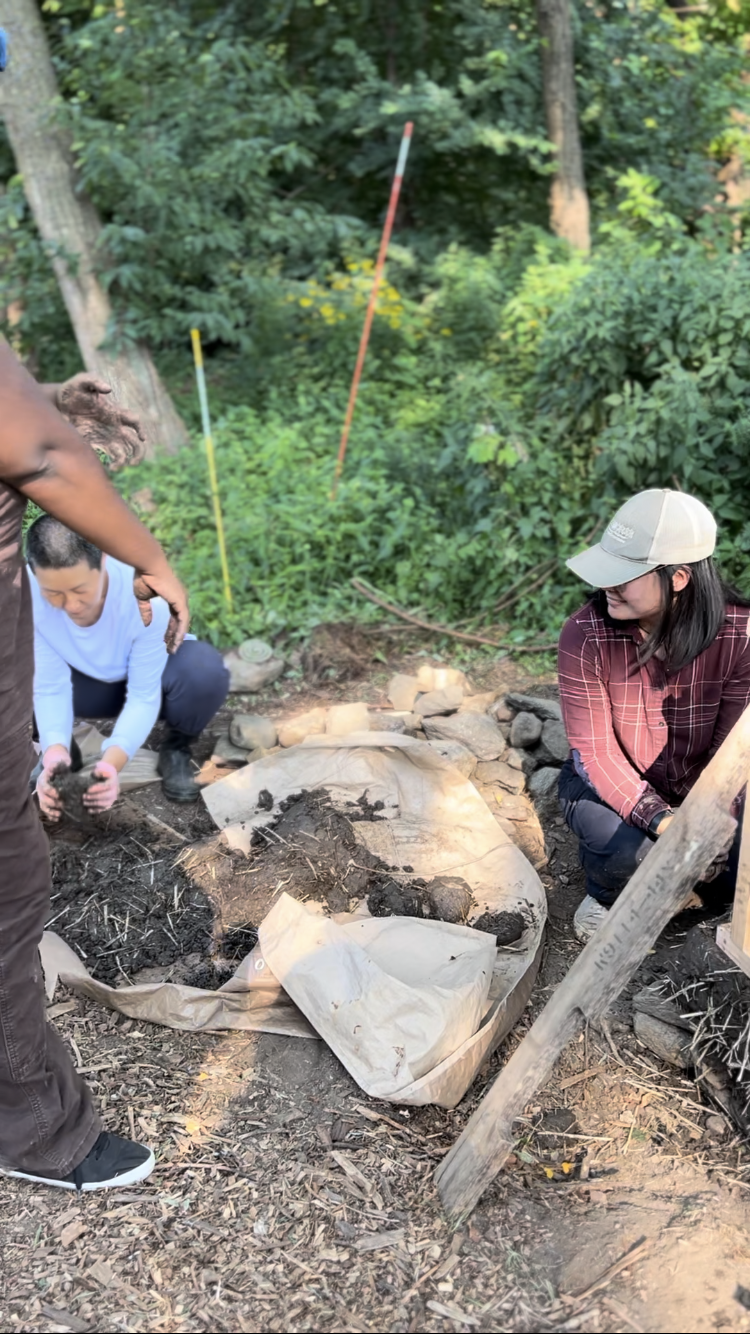
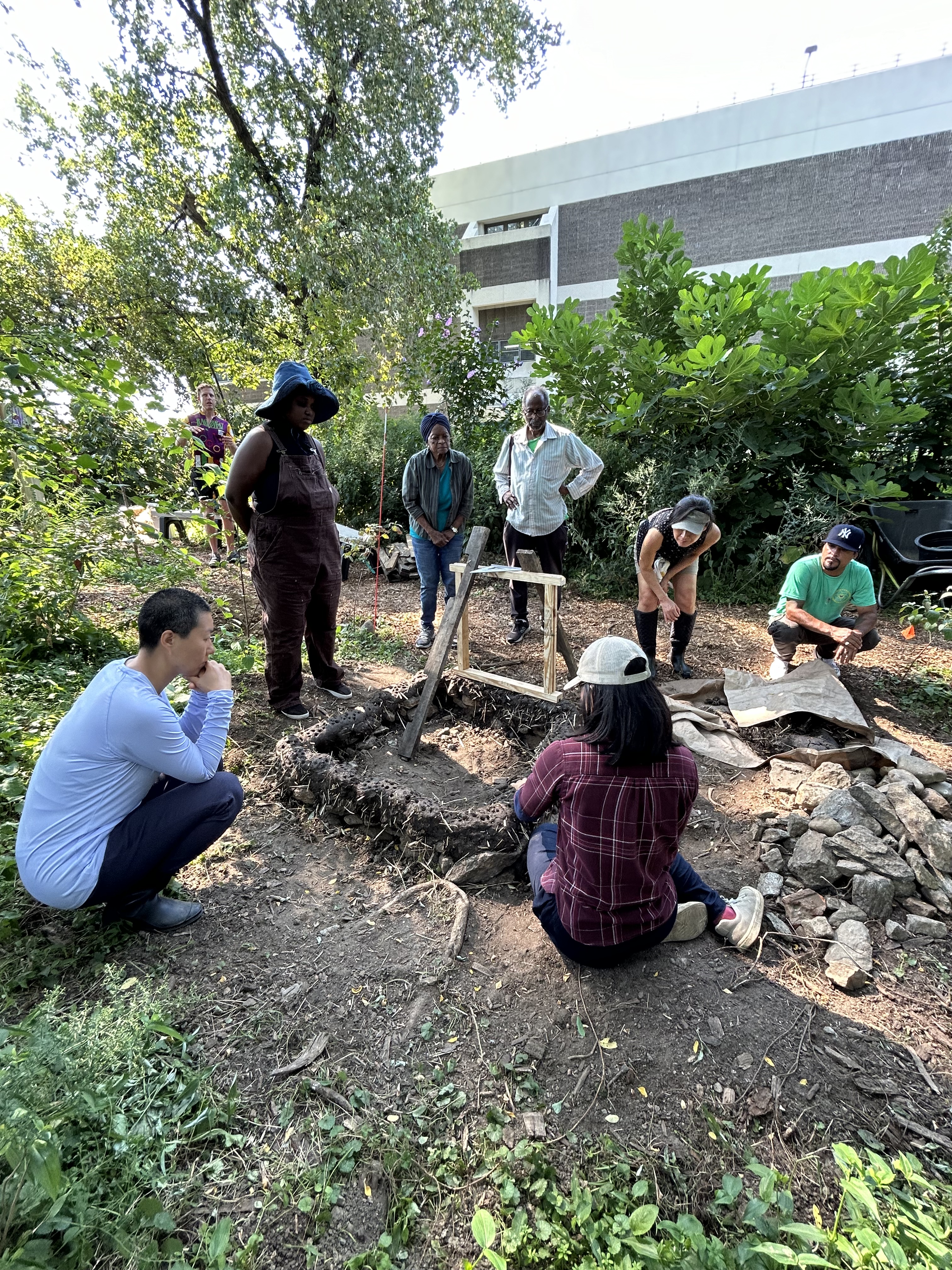
I had a wonderful time sharing about natural building with everyone at the workshop, and all the enthusiasm and questions was wonderful. I loved seeing people get into it and enjoy themselves, the wheels churning the whole time.
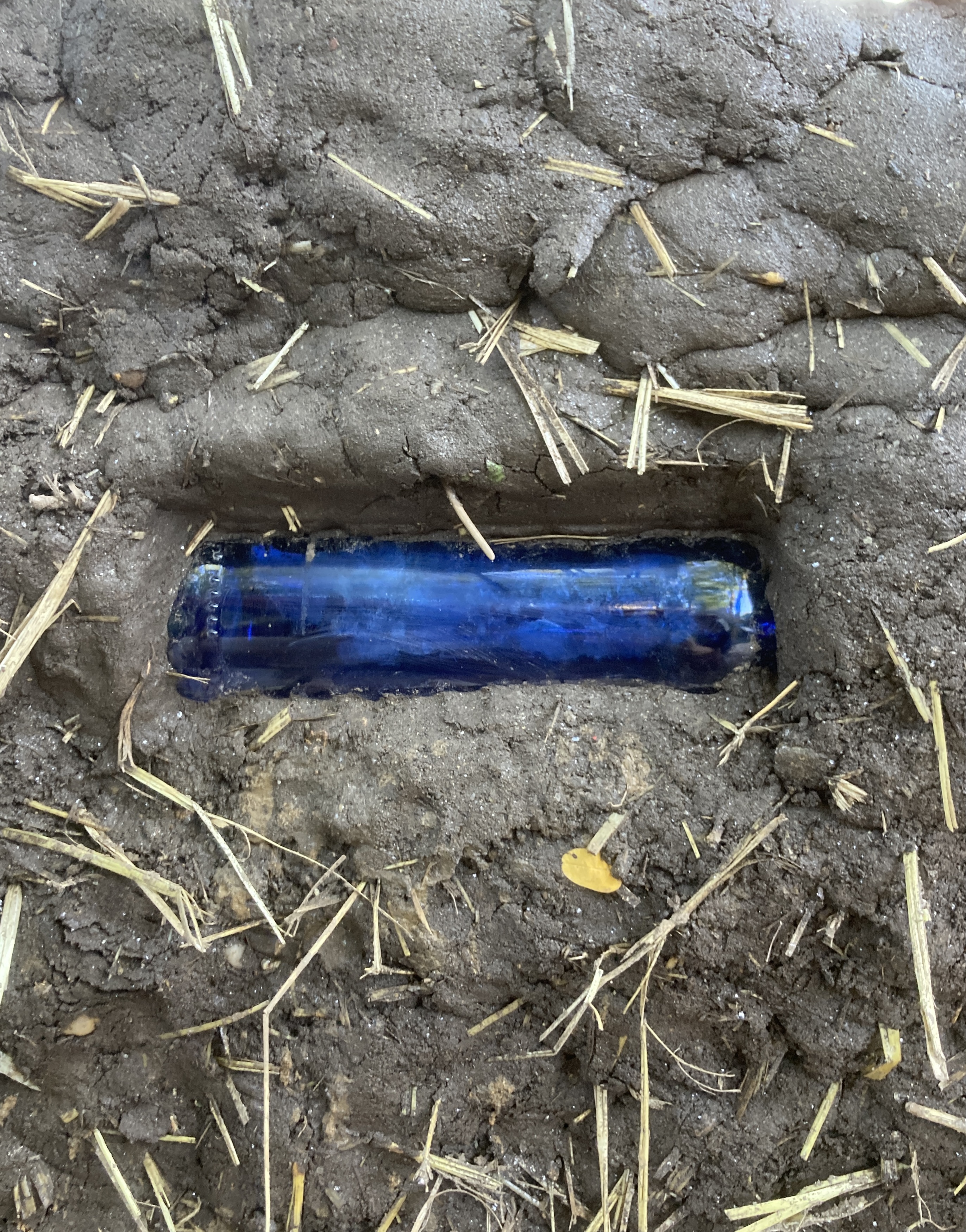
On my last day on site, we raced to build a foot or more of height, installing the roosts, door buck and the bottle windows. By the end, the whole team was confidently making and applying cob: my job was done!
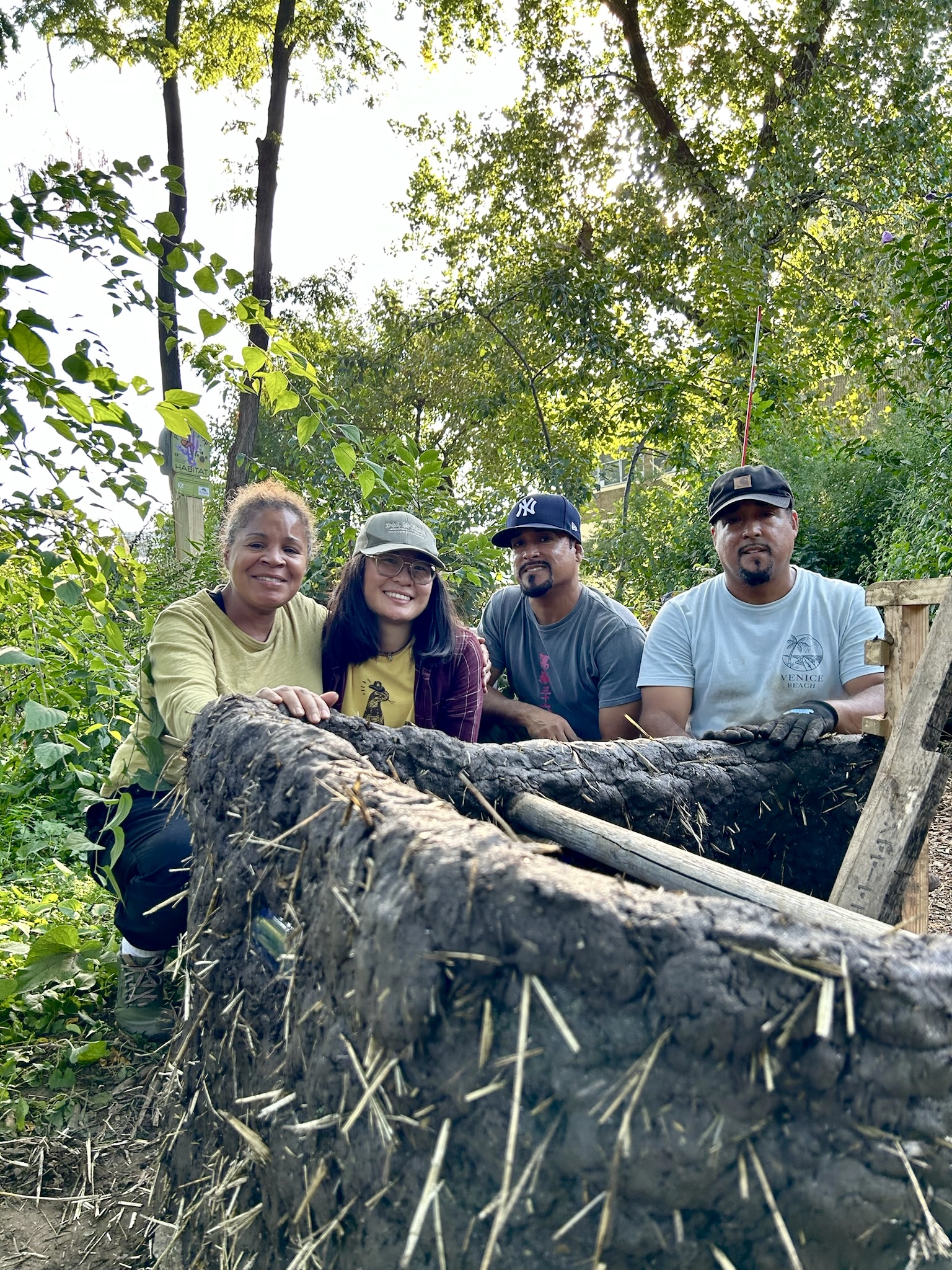
It was an absolute joy to work with the Drew Gardens team, Ivette, Julio, and Mario. Just such lovely human beings with so much energy, positivity, and thoughtfulness to share. Thank you!
I’ll be back at Drew Gardens next year to plaster this miniature cob house, and host another workshop. I’m now back in Boston now for a busy autumn of continuing to build the light straw-clay tiny house. Workshop dates here in Medford this October will be released in the next week, so stay posted!
I also have an Instagram now, if you’d like to follow me there.

 biolithic builds
Leave a reply to New Yorkers: Join Workshop Graduate Emily Wang’s Own Workshop on Sustainable Building 9/14 or 9/15! » Joshua Spodek Cancel reply